


How do we know if something is timeless?
I use the words timeless and traditional interchangeably sometimes, but today we’re talking specifically about timeless design elements—not traditional ones. Timelessness is less about a particular style and more about endurance. A timeless detail is one that has existed for generations, drifted in and out of popularity, yet never disappeared entirely or become universally considered tacky. It may trend more heavily during certain decades, but it never fully leaves the conversation.
Think of classic materials: marble, brass, chrome, solid wood.
Hardware and lighting trends come and go, but the materials themselves have proven staying power. Marble has been around since ancient architecture. Brass has cycled through popularity countless times. Chrome, too. These are timeless because they’ve been used in homes for well over 75 years—and in many cases, centuries.
On the flip side, think of something like faux-marble laminate from the 70s and 80s. It wanted to look timeless, but it wasn’t. It was imitation, not the thing itself. Materials that try to mimic historic ones, instead of being them, rarely hold the test of time in the same way.
If we’re going to generalize, I’d say this:
If you could find it in a home built before 1950, there’s a good chance it’s timeless.
Not because 1950 is magic, but because post-war housing shifted toward mass-production and cost-cutting. True materials were replaced with lookalikes. That’s when “trendy” began to overtake “timeless.”
But here’s where people get tripped up—timeless isn’t one style.
Within timeless design, we see countless forms:
- Art Deco geometry
- Colonial peg rails and wood knobs
- Mid-century silhouettes
- Early American log-cabin simplicity
- English cottage botanicals
All different. All historic. All timeless.
Just because something has stood the test of time doesn’t mean it belongs in every house. Wood knobs? Timeless. But they may not suit your 2000s modern coastal home or your sleek mid-century renovation. A timeless element can still feel wrong if it clashes with the architecture, story, or material language of the space.
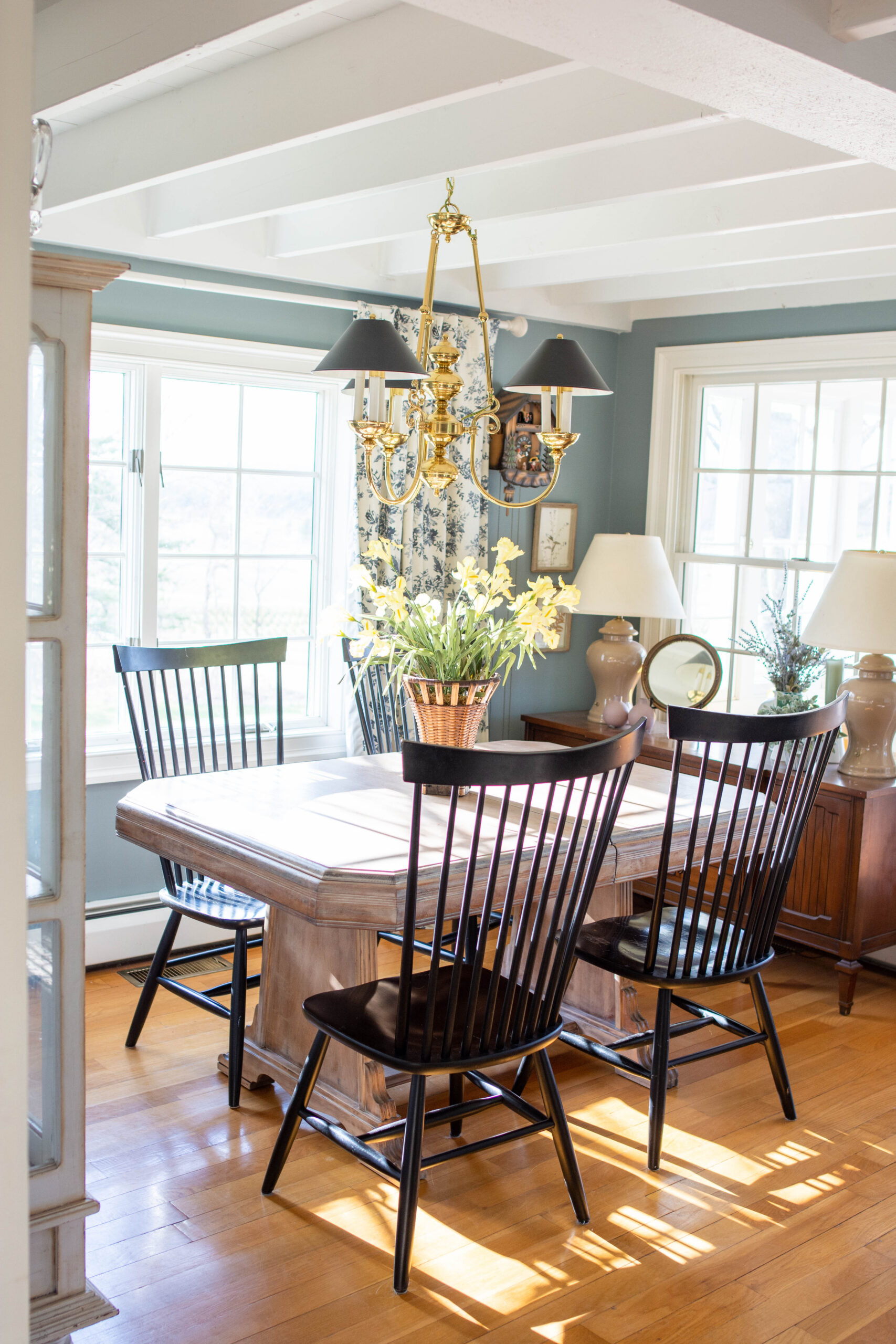
So to tie it all together:
1. Timeless ≠ Traditional.
They can overlap, but they are not synonyms. Timeless design draws from many eras and style movements—not just traditional ones.
2. Timeless does not automatically mean “right for your home.”
A detail can be beautiful, historic, proven—and still the wrong fit for your space.
Choosing timeless design is less about copying old homes and more about honoring the age, architecture, and truth of your home. When we select materials that have history behind them—and use them in ways that make sense—we create spaces that age gracefully instead of dating themselves into the next remodel.




LEAVE A COMMENT
View Comments